
Home » Articles posted by naasreligion (Page 9)
Author Archives: naasreligion
NAASR Annual Reception, co-sponsored by Equinox Publishing

NAASR and Equinox Publishing are pleased to announce the details for our reception at the upcoming annual conference in Atlanta:
Date: Friday, 20 November 2015
Time: 7pm-9pm
Location: Publik Draft House, 654 Peachtree Street NE (click here for a map)
We look forward to seeing you there for food, drinks, and conversation!

Call for Papers: Religious Studies and Theology

Religious Studies and Theology—a journal for which several NAASR members serve on the editorial board—is looking for submissions. This peer-reviewed journal publishes in June and December; however manuscripts are accepted on a rolling basis throughout the year.
Religious Studies and Theology welcomes original research pertinent to the contemporary world from a range of disciplines, with a particular interest in Canadian perspectives and/or studies of Canada from abroad and in relation to global contexts.
Manuscript submission is easily completed online here. Submissions are sent by the Editor to two peer-reviewers in a double-blind process. You will be notified within one week of submission if your manuscript has been sent for review. You will be notified of the decision within approximately three months and will be provided with a copy of reviewer comments.
Books of Interest: Jacob Neusner on Religion
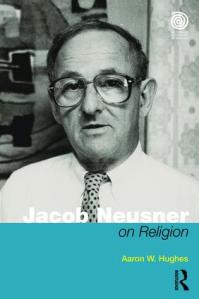 Aaron W. Hughes, Jacob Neusner on Religion (Routledge, 2015).
Jacob Neusner was a prolific and innovative contributor to the study of religion for over fifty years. A scholar of rabbinic Judaism, Neusner regarded Jewish texts as data to address larger questions in the academic study of religion that he helped to formulate. Jacob Neusner on Religion offers the first full critical assessment of his thought on the subject of religion. Aaron W. Hughes delineates the stages of Neusner’s career and provides an overview of Neusner’s personal biography and critical reception. This book is essential reading for students and scholars interested in Neusner specifically, or in the history of Religious Studies, Jewish Studies, and philosophy of religion more broadly.
This is the latest volume in Routledge’s Key Thinkers in the Study of Religion series, sponsored by NAASR.
In Support of BASR and the Study of Religion at Stirling
 Below is the text sent on 4 September 2015 to the University of Stirling on behalf of NAASR’s Executive Council.
On behalf of the Executive Council of the North American Association for the Study of Religion, a member of the International Association for the History of Religions, we are writing you to offer our strong support of the September 3rd statement issued by the British Association for the Study of Religion. We agree that “Colleagues and students from Stirling have been at the forefront of critical study and debate about religion,” and that the academic and nondenominational study of religion “has a key role within higher education institutions.” Consequently, we echo their call for you to “reconsider the closure of an independent department that is greatly valued nationally and internationally.”
Sincerely,.
Books of Interest: Building God’s Kingdom
 Julie J. Ingersoll, Building God’s Kingdom: Inside the World of Christian Reconstruction (Oxford 2015).
For the last several decades, at the far fringes of American evangelical Christianity has stood an intellectual movement known as Christian Reconstruction. The proponents of this movement embrace a radical position: that all of life should be brought under the authority of biblical law as it is contained in both the Old and New Testaments. They challenge the legitimacy of democracy, argue that slavery is biblically justifiable, and support the death penalty for all manner of “crimes” described in the Bible including homosexuality, adultery, and Sabbath-breaking. But, as Julie Ingersoll shows in this fascinating new book, this “Biblical Worldview” shapes their views not only on political issues, but on everything from private property and economic policy to history and literature. Holding that the Bible provides a coherent, internally consistent, and all-encompassing worldview, they seek to remake the entirety of society–church, state, family, economy–along biblical lines.
Tracing the movement from its mid-twentieth-century origins in the writings of theologian and philosopher R.J. Rushdoony to its present-day sites of influence, including the Christian Home School movement, advocacy for the teaching of creationism, and the development and rise of the Tea Party, Ingersoll illustrates how Reconstructionists have broadly and subtly shaped conservative American Protestantism over the course of the late-twentieth and early-twenty-first centuries. Drawing on interviews with Reconstructionists themselves as well as extensive research in Reconstructionist publications, Building God’s Kingdom offers the most complete and balanced portrait to date of this enigmatic segment of the Christian Right.
Books of Interest: Jenseits von Religion?
 Steffen Führding, Jenseits von Religion?: Zur sozio-rhetorischen “Wende” in der Religionswissenschaft (Transcript 2015).
Seit mehr als 40 Jahren drehen sich viele Diskussionen in der Religionswissenschaft um eine genaue Ortsbestimmung der Disziplin in Abgrenzung zu anderen religionsbezogenen Fächern. Mit einem in Anlehnung an den nordamerikanischen Religionswissenschaftler Russell T. McCutcheon »sozio-rhetorisch« genannten Ansatz stellt Steffen Führding eine aktuell kontrovers diskutierte Position in dieser internationalen Debatte vor. Er verortet den Ansatz kontrastierend in der nordamerikanischen und europäischen Disziplingeschichte, wendet ihn exemplarisch an und zeigt Perspektiven auf, wie damit theorie- und methodikbezogene Herausforderungen in der Religionswissenschaft produktiv angegangen werden können.
Announcement: Position at Georgia Southern University
 The Department of Literature and Philosophy in the College of Liberal Arts and Social Sciences invites nominations and applications for the position of Department Chair at the rank of Associate or Full Professor.
Reporting to the Dean of the College of Liberal Arts and Social Sciences, the position of Department Chair requires vision, leadership, administrative talents, teaching (two courses per year), research, and service, as well as a terminal degree. The Chair will work in a collaborative department administrative structure, representing 24 full-time faculty members. The position is a tenured or tenure-track, 12-month appointment, and the salary is competitive and commensurate with qualifications and experience.
Books of Interest: Writing Religion
 Steven W. Ramey (ed.), Writing Religion: The Case for the Critical Study of Religion (University of Alabama Press 2015).
In 2002, the University of Alabama’s Department of Religious Studies established the annual Aronov Lecture Series to showcase the works of nationally recognized scholars of religion capable of reflecting on issues of wide relevance to scholars from across the humanities and social sciences. Writing Religion: The Case for the Critical Study of Religions is an edited collection of essays that highlights critical contributions from the first ten Aronov lecturers.
Section one of the volume, “Writing Discourses,” features essays by Jonathan Z. Smith, Bruce Lincoln, and Ann Pellegrini that illustrate how critical study enables the analysis of discourses in society and history. Section two, “Riting Social Formations,” includes pieces by Arjun Appadurai, Judith Plaskow, and Nathan Katz that reference both the power of rites to construct society and the act of riting as a form of disciplining that both prescribes and proscribes. The writings of Tomoko Masuzawa, Amy-Jill Levine, Aaron W. Hughes, and Martin S. Jaffee appear in section three, “Righting the Discipline.” They emphasize the correction of movements within the academic study of religion.
Steven W. Ramey frames the collection with a thoughtful introduction that explores the genesis, development, and diversity of critical analysis in the study of religion. An afterword by Russell McCutcheon reflects on the critical study of religion at the University of Alabama and rounds out this superb collection.
The mission of the Department of Religious Studies is to “avoid every tendency toward confusing the study of religion with the practice of religion.” Instruction about—rather than in—religion is foundational to the department’s larger goal of producing knowledge of the world and its many practices and systems of beliefs. Infused with this spirit, these fascinating essays, which read like good conversations with learned friends, offer significant examples of each scholar’s work. Writing Religion will be of value to graduate students, advanced undergraduates, and scholars interested in the study of religion from a critical perspective.
Books of Interest: New Religiosity in Contemporary Sweden
 Liselotte Frisk and Peter Åkerbäck, New Religiosity in Contemporary Sweden: The Dalarna Study in National and International Context (Equinox 2015).
The contemporary popular or new religious landscape in Sweden — arenas with religious elements outside the established churches — is large and multifaceted. Religion is today expressed in different localities, like retreat centers, health centers and gyms, and can manifest as for example healing, mindfulness, seances, coaching and body therapies. The boundaries between religious and secular arenas are becoming increasingly blurred. The popular or new religiosity is firmly rooted in older traditions, but also expresses creative innovation as a result of globalization, secularism, individualism and the impact of psychological and therapeutic orientations.
The book is based on a local study of contemporary popular or new religiosity in the area of Dalarna, Sweden. Religious expression always reflects its time. One of the book’s purposes is to explore how religion is perceived in our time and how Christianity has shaped our view of what belongs to the “religion” and what is seen as “superstition”. To understand religion it is necessary to study its practical everyday expressions.
Books of Interest: Fabricating Origins
 Russell T. McCutcheon (editor), Fabricating Origins (Equinox 2015).
Fabricating Origins builds on a series of posts that originally appeared, in earlier forms, at the blog for Culture on the Edge. In these posts each member of the group focused on the problem of origins, examining how we repeatedly conjure up an authorized past that suits the needs of the continually changing present. Fabricating Origins presses these short studies further by inviting ten early career scholars to each work with Culture on the Edge by applying, extending, even critiquing the group, to further illustrate for readers how talk of origins in the present is so much more interesting that being preoccupied with long past origins themselves.
The volume, like all books in the Working with Culture on the Edge series, is introduced and concluded by original, theoretically challenging but engaging essays. It provides a selection of ten main articles which draw on a variety of examples to make the case, followed by original commentaries on each, all of which are pithy but substantive. Although not a textbook, and while challenging for any reader unaccustomed to making the switch from origins to the discourse on origins, Fabricating Origins is especially aimed at the early career reader. The volume therefore includes an annotated set of suggested readings on how to rethink origins as the product of contemporary and always tactically useful talk and action.

