
Home » Articles posted by naasreligion (Page 8)
Author Archives: naasreligion
Gary Lease Memorial Lecture
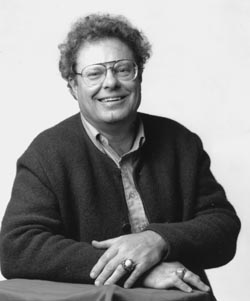 This past summer the opening lecture at the IAHR world congress in Germany was named as the Gary Lease Memorial Lecture, in honor of the onetime IAHR treasurer and also longtime NAASR member and former NAASR Executive Secretary/Treasurer. Gary, who died of cancer on January 4, 2008, was also the chair of UC Santa Cruz’s noted History of Consciousness program; he was a loyal and generous friend, a gifted teacher, and a critical interlocutor who was deeply committed to the study of religion as being but one element of the historical, human sciences.
The IAHR has established this lecture in his honor, taking place at each quinquennial world congress, and we’re inviting NAASR members to help fund this lectureship’s future costs (such as the travel and lodging for the designated lecturer). If you are able to contribute, whatever amount, then we recommend that you forward your donation to our Executive Director, Craig Martin, designating it for this purpose, and he will then collect all donations and forward them to the IAHR, earmarked specifically for this purpose.
Should you also wish to donate toward NAASR’s own operating expenses, then we’d welcome that as well.
All donations will receive a receipt from NAASR so that they can be claimed as a tax exempt donation (at least here in the US).
For more information on Gary, please consult this link.
Call for Papers: Method Today
NAASR 2016 ● San Antonio, TX ● November 18-19, 2016
With the success of the 2015 NAASR program—devoted to examining the current state of theory in the study of religion with four main papers plus responses—the 2016 program will retain the same format but turn its attention instead to the closely related topic of method. And because of the wide variety of methods used in the cross-disciplinary study of religion we’re proposing narrowing the focus to four key tools that all scholars of religion surely employ, regardless their approach to the study of religion: description, comparison, interpretation, and explanation.
The program committee is therefore inviting members to consider the place of each of these in the study of religion—recognizing that examining each opens conversations on far wider topics of relevance to NAASR’s mission, such as description being intimately linked to ethnography, viewpoint, first person authority (to name but a few). In much the same way, detailed consideration of the other three tools also leads into conversations on the basics of the field (E.g., Having survived critiques of comparison as ethnocentric, what is the future of comparative studies and how ought they to be carried out? Given the once dominant, but for some now discredited, place of hermeneutical approaches what is entailed in the interpretation of meaning today? And, despite their once prominent place several generations ago, what does one make of the continuing lack of interest in the academy in naturalistic, explanatory theories of religion?) This focus on method, by means of these four basic tools, therefore provides us with an opportunity to assess the current state of the field.
As with the 2015 program, three scholars who work in a variety of subfields will respond to each of the four main papers (thereby involving 16 participants in total). The four main, pre-circulated papers will only be summarized briefly at their sessions and a large portion of the sessions will again be reserved for open conversations; the goal is that all of the papers will then be published in a special issue of MTSR. Unlike last year, however, the Program Committee will commission the four main generative papers (based on hopes that they eventually contribute to a new NAASR book series, to be announced soon).
The call this year, then, is for 12 respondents who are willing to each tackle the statements made by one of the four main papers. A successful proposal to be a respondent must address only one of the four tools—description, comparison, interpretation, or explanation—briefly demonstrating how you understand the term, challenges for its use today, and what, for you, is at stake in its deployment in a specific historical, textual, or behavioral situation. Successful proposals, then, should briefly demonstrate an awareness for how one of these tools intersects with the history of our field and our current practices, which simultaneously demonstrates your preparation to offer a challenging and thought-provoking response at this year’s upcoming meeting.
Send your 250 word (max.) abstract to
NAASR’s Vice President, Aaron Hughes (aaron.hughes@rochester.edu),
by no later than March 01, 2016
Note: based on the success of the 2015 workshop, a NAASR jobs workshop will also be offered in 2016, organized again by Mike Graziano; more information on this will be circulated at a later date.
Call for Papers: Religion and Movement

An Interdisciplinary Graduate Student Conference
University of Chicago Divinity School
April 15-16, 2016
Keynote Speaker: Professor Thomas Tweed
The University of Chicago Divinity School is pleased to announce its first annual Graduate Student Conference, to be held on April 15th and 16th, 2016. This year’s theme is “Religion and Movement.” We understand the definitions of the conference’s constitutive categories—“religion” and “movement”—to be highly contingent and contestable, and therefore to be open to a multitude of varied interpretations. We invite papers that consider these topics from all disciplinary and methodological orientations. Papers may address any number of traditions, geographies, or historical time periods, but should involve sustained and self-conscious theoretical reflection on the conference themes.
Possible topics include, but are not limited to: immigration and/or migration; diaspora; pilgrimage; dance; ritual performance; spirit possession; movement within/between public and/or private spaces; embodied engagement with architecture or other material objects; the movement of capital or material culture.
Graduate students interested in applying to the conference should submit a CV and a paper abstract of 300-500 words to [uchidivinitygradconference@gmail.com] by January 15th, 2015. Notifications of acceptance will be sent by January 31st, 2016. We encourage students from all fields and all levels of graduate study with interdisciplinary interests in the study of religion to submit proposals. We are eager to support and engage the work of students who identify as members of groups typically under-represented in academia. Some financial support may be available to those students who require aid in order to attend.
We welcome any questions applicants might have and invite you to communicate directly with the organizing committee, which is made up of doctoral students from a number of the Divinity School’s subfields. Questions may be sent to us at [uchidivinitygradconference@gmail.com].
Books of Interest: Islam and the Tyranny of Authenticity
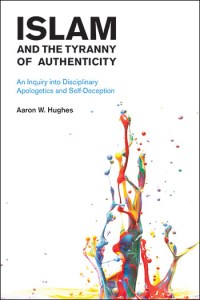 Aaron W. Hughes, Islam and the Tyranny of Authenticity (Equinox, 2016)
Many scholars of Islam are interested in creating a liberal, inclusive, pluralistic, feminist, and modern version of the religion that they believe to be explicit in the pages of the Qur’ān, but missed by earlier interpreters. In so doing, they create “good” Islam and, in the process, seek to define what does and does not get to count as authentic. As the purveyors of what they now believe to be veritable Islam, they subsequently claim that rival presentations are bastardizations based either on Orientalism and Islamophobia (if one is a non-Muslim) or misogyny and homophobia (if one is a Muslim that disagrees with them). Instead of engaging in critical scholarship, they engage in a constructive and theological project that they deceive themselves into thinking is both analytical and empirical. This book provides a hard-hitting examination of the spiritual motivations, rhetorical moves, and political implications associated with these apologetical discourses. It argues that what is at stake is relevance, and examines the consequences of engaging in mythopoesis as opposed to scholarship.
Seats Still Available for the NAASR Job Workshop
NAASR’s 2015 workshop, “…But What Do You Study?”: A Workshop on Theory and Method in the Job Market, still has some seats available. Contact Mike Graziano if you’re interested—details below.
This session, to be held as a part of the NAASR program this November in Atlanta, proposes to explore the employment challenges facing early career scholars who are interested in issues of theory & method in the study of religion, through both a discussion and workshop. This session addresses issues important to junior NAASR members (notably, but not exclusively, ABDs now entering/about to enter the job market) by demonstrating how a professional organization can provide a practical and strategic forum for job-market advice.
The following activities will take place in this 90 min. workshop:
1. Open Discussion
The first half of the session will be devoted to an open discussion, led by Martha G. Newman (University of Texas at Austin) and Merinda Simmons(University of Alabama). Each will begin by providing brief introductory remarks (approx. 5 minutes each) on what they each see as constructive and strategic advice for early career scholars who are navigating the academic job market, aimed initially at how applicants can be strategic not only in trying to ascertain a Department’s needs but also in negotiating potential theoretical and political landmines in the field. A discussion (35 min.) will follow in which participants can discuss these issues in an informal atmosphere and share information. This guided discussion will therefore focus on four central questions, namely, how might early career scholars interested in theory and method:
- represent themselves strategically on the job market?
- apply to calls for general positions, fitting themselves to broad departmental needs?
- shape their cover letters and CVs to appeal to a wide range of departments?
- respond to critiques that they have no “specialty,” “content,” or “area of study”?
The discussion is designed to reflect different opinions regarding the place of theory & method in the job market, as well as in the study of religion more generally.
2. Workshop
In the second half, participants will break into small groups, each led by a more senior NAASR member. Building on the previous discussion, participants will work within their groups to workshop how they might best represent themselves, their work, and their scholarly interests on the job market. The smaller setting will allow for more “hands on” advice, taking as examples the CV and cover letters participants can bring with them to the session. Simply focusing on what one says in a cover letter’s opening paragraph, for example, or how one orders a C.V., will provide the way into larger questions of representation in these small group discussions. Participants in this section will have an opportunity to work with John E. Llewellyn(Missouri State), Russell McCutcheon (University of Alabama), Martha G. Newman (University of Texas at Austin), Steven Ramey (University of Alabama), and Merinda Simmons (University of Alabama).
Scholars of all concentrations within the field of Religious Studies are welcome to join the workshop—whether a NAASR member or not—though preference will be given to early career scholars, particularly those at the senior ABD stage (i.e., those already on or going onto the job market). Shortly before the workshop, but once the participants have been identified, each participant will be invited to share with the other members, via email or a closed social media group, their academic focus/dissertation topic, level of teaching experience, their level of experience with the job market as well as their own current position (e.g., PhD Student, Postdoc, Instructor, etc.) in order to ensure all participants come to the meeting somewhat familiar with the diversity of experience in the workshop. In addition, each participant will be invited to bring one sample cover letter and one sample CV which may be used in the small group activities. More details will follow after the participant list has been finalized.
Space is limited to 25 participants in this NAASR workshop. To register, please e-mail the organizer, Michael Graziano (mgraziano@fsu.edu). In this request to register please include your current degree or professional career stage.
NAASR News
 NAASR’s executive council is pleased to announce two new partnerships that we believe will benefit our membership!
First, many of you are likely familiar with The Religious Studies Project, the excellent podcast series sponsored by the British Association for the Study of Religion (BASR). NAASR has recently joined BASR as a sponsor for the project; we will be donating funds to support a number of their endeavors, with the hope that they will continue to create content useful to—or even featuring—NAASR members.
 Second, the executive council has decided to enter into a two-year agreement with Equinox Publishing (beginning in 2016), to provide an online subscription to all members for the Bulletin for the Study of Religion, which is currently published in affiliation with NAASR. Starting next year, then, membership benefits will include electronic subscriptions to both the Bulletin and Method & Theory in the Study of Religion.
NAASR Annual Reception, co-sponsored by Equinox Publishing

NAASR and Equinox Publishing are pleased to announce the details for our reception at the upcoming annual conference in Atlanta:
Date: Friday, 20 November 2015
Time: 7pm-9pm
Location: Publik Draft House, 654 Peachtree Street NE (click here for a map)
We look forward to seeing you there for food, drinks, and conversation!

Call for Papers: Religious Studies and Theology

Religious Studies and Theology—a journal for which several NAASR members serve on the editorial board—is looking for submissions. This peer-reviewed journal publishes in June and December; however manuscripts are accepted on a rolling basis throughout the year.
Religious Studies and Theology welcomes original research pertinent to the contemporary world from a range of disciplines, with a particular interest in Canadian perspectives and/or studies of Canada from abroad and in relation to global contexts.
Manuscript submission is easily completed online here. Submissions are sent by the Editor to two peer-reviewers in a double-blind process. You will be notified within one week of submission if your manuscript has been sent for review. You will be notified of the decision within approximately three months and will be provided with a copy of reviewer comments.
Books of Interest: Jacob Neusner on Religion
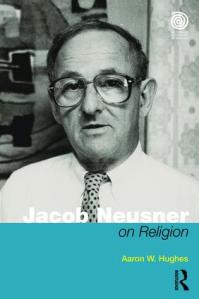 Aaron W. Hughes, Jacob Neusner on Religion (Routledge, 2015).
Jacob Neusner was a prolific and innovative contributor to the study of religion for over fifty years. A scholar of rabbinic Judaism, Neusner regarded Jewish texts as data to address larger questions in the academic study of religion that he helped to formulate. Jacob Neusner on Religion offers the first full critical assessment of his thought on the subject of religion. Aaron W. Hughes delineates the stages of Neusner’s career and provides an overview of Neusner’s personal biography and critical reception. This book is essential reading for students and scholars interested in Neusner specifically, or in the history of Religious Studies, Jewish Studies, and philosophy of religion more broadly.
This is the latest volume in Routledge’s Key Thinkers in the Study of Religion series, sponsored by NAASR.
In Support of BASR and the Study of Religion at Stirling
 Below is the text sent on 4 September 2015 to the University of Stirling on behalf of NAASR’s Executive Council.
On behalf of the Executive Council of the North American Association for the Study of Religion, a member of the International Association for the History of Religions, we are writing you to offer our strong support of the September 3rd statement issued by the British Association for the Study of Religion. We agree that “Colleagues and students from Stirling have been at the forefront of critical study and debate about religion,” and that the academic and nondenominational study of religion “has a key role within higher education institutions.” Consequently, we echo their call for you to “reconsider the closure of an independent department that is greatly valued nationally and internationally.”
Sincerely,.
 naasr.com