
Books of Interest: Japanese Buddhist Pilgrimage

Michael Pye, Japanese Buddhist Pilgrimage (Equinox 2015).
Japanese Buddhist Pilgrimage explores the ritual practice of “circulatory pilgrimages” – the visiting of many temples in a numbered sequence. Every year, hundreds of thousands of pilgrims travel such temple routes, seeking peace of mind, health and wellbeing for themselves and others as the benefits of such meritorious endeavour. This form of pilgrimage appears to be unique to Japan. The practice began centuries ago and involved visiting 33 temples devoted to the Bodhisattva Kannon, spread widely over western Japan. Soon afterwards the equally famous pilgrimage to 88 temples on Japan’s fourth island of Shikoku came into prominence.
This is the first comprehensive study of all the major and many of the minor routes, The book also examines how the practice of circulatory pilgrimage developed among the shrines and temples for the Seven Gods of Good Fortune, and beyond them to the rather different world of Shintō. The varying significance of the different pilgrimages is also explored. In addition to all the information about the routes, the book includes numerous illustrations and examples of the short Buddhist texts chanted by the pilgrims on their rounds.
Quote the discount code “Pilgrimage” to receive 25% off the retail price when ordering from http://www.equinoxpub.com; valid until the end of April 2015.
NAASR Note: Religious Studies, Liberal Arts, and the Public University
***Deadline extended to 31 January 2015***
The following CFP might be of interest to NAASR members:
Religious Studies, Liberal Arts, and the Public University
The conference will examine religious studies methods, curriculum, pedagogy, and ethos in terms of the field’s relationship to two key social locations, the liberal arts and the public university. Proposals are invited for papers and presentations on this theme. The organizers are particularly interested in the following topics: the intersection or disjunction of religious studies methods with the fields of humanities and social sciences; what religious studies contributes to liberal education; disciplinary ethos in the context of public universities bound by the First Amendment; the public university as fertile context for religious studies as an analytical discipline; history of religious studies at public universities; curricular and pedagogical challenges of religious studies in both liberal arts and public university contexts; the departmental model and its alternatives, especially the presence of religious studies as part of multidisciplinary departments; the articulation of the value of religious studies in an age of austerity; and particular challenges for religious studies in online or hybrid pedagogy. Proposals falling under the conference title but not specifically listed here will also be considered. Please send proposals (250 word maximum) by email attachment to Professor Rebecca Raphael at rr23 at txstate dot edu by January 31, 2015. The conference will be held April 10-11 at Texas State University, San Marcos, TX. Sponsored by the College of Liberal Arts, the Department of Philosophy, and the NEH Distinguished Teaching Professor in Humanities.
Books of Interest: Religious Discourse in Modern Japan
 Isomae Jun’ichi, Religious Discourse in Modern Japan (Brill 2014).
Religious Discourse in Modern Japan explores the introduction of the Western concept of “religion” to Japan in the modern era, and the emergence of discourse on Shinto, philosophy, and Buddhism. Taking Anesaki’s founding of religious studies (shukyogaku) at Tokyo Imperial University as a pivot, Isomae examines the evolution of this academic discipline in the changing context of social conditions from the Meiji era through the present. Special attention is given to the development of Shinto studies/history of Shinto, and the problems of State Shinto and the emperor system are described in relation to the nature of the concept of religion. Isomae also explains how the discourse of religious studies developed in connection with secular discourses on literature and history, including Marxism.
Books of Interest: Chasing Down Religion
 Panayotis Pachis and Donald Wiebe (eds.), Chasing Down Religion: In the Sights of History and the Cognitive Sciences (Equinox 2014)
Whether as a historian finding solutions to unresolved problems or as a scientist finding the causes for events and actions, Luther Martin’s primary focus has been to get to the roots of the religious impulse in human existence. This collection of essays from scholars of his own generation and from his best students cover the three major strands of his work: the Greco-Roman world, cognitive science approaches to explaining religious phenomena and methodological issues in the academic study of religions. The contributions build on the work of Luther Martin and further the ongoing discussion and debate within these areas of religious studies.
2015 Call for Proposals: Theory in a Time of Excess
Although the terms “method and theory” can now be found in course titles, curricula/degree requirements, area/comprehensive exams, and listed as competencies on the CVs of scholars from across a wide array of subfields, and while a variety of groups at annual scholarly conferences itemize theorizing among the topics that they routinely examine, it seems that few of the many examples of doing theory today involve either met-reflection on the practical conditions of the field or rigorously explanatory studies of religion’s cause(s) or function(s). So, despite the appearances of tremendous advances in the field since NAASR’s founding as the lone place for carrying out theory in the study of religion—when “theory” was indeed a rare word and was often replaced with the more neutral “approach”—it can be argued that little has changed.
The upcoming 2015 meeting in Atlanta marks the organization’s 30th anniversary and so the NAASR program will be divided into two related parts: (i) an invited Presidential Panel on the history of NAASR and the changing (or not) circumstances of its present and possible future and (ii) four separate panels (all leading up to the Presidential Panel), two hours in length each, all exploring a variety of views on how one carries out theorizing in the academic study of religion today—when almost everyone claims to be a theorist but few seem to do theory.
Each of the four panels will focus on one substantive statement on what theory is (or is not) and what can (or cannot) be accomplished by adopting a particular understanding of the requirements of theorizing in the human sciences. This call for proposals is therefore devoted to having NAASR members submit approx. 250 word abstracts from which the Program Committee will select four papers, each of which presses members to consider different issues involved with defining and doing theory in the academic study of religion. The abstract must make clear the submitters understanding of what constitutes theory while also summarizing the direction of his/her argument and any examples/data domains with which the presenter will work.
Note: Proposals selected will need to result in substantive and original essays, of approx. 4,000-5,000 words in length, that will be submitted to NAASR in PDF form by no later than October 1, 2015, for pre-distribution to all members. Also, these papers will not be read in Atlanta but, due to the pre-distribution, presenters will have 15 minutes to orally summarize their arguments. Respondents will then be invited by the Program Committee to work with each paper, applying and testing its argument.
Our goal is to publish the collection in MTSR or another appropriate venue.
Submit all proposals, by no later than February 15, 2015, as PDF file attachments to:
Prof. Aaron Hughes
NAASR Vice President and Chair of the Program Committee
University of Rochester
aaron.hughes at rochester dot edu
Announcement: New Officers
At the annual NAASR business meeting in San Diego last weekend we voted in new officers. Naomi Goldenberg and K. Merinda Simmons were elected to serve as councilors on the executive council; Russell T. McCutcheon was elected as president, and Aaron Hughes as vice president.
Many thanks to those who are rolling off of the executive council—Chris Lehrich, Tim Lubin, and Matt Sheedy—for all your service to the institution these last few years.
Books of Interest: Capitalizing Religion
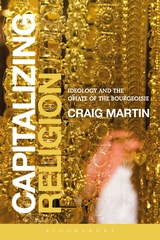 Craig Martin, Capitalizing Religion: Ideology and the Opiate of the Bourgeoisie (Bloomsbury 2014).
Talk of ‘spirituality’ and ‘individual religion’ is proliferating both in popular discourse and scholarly works. Increasingly people claim to be ‘spiritual but not religious,’ or to prefer ‘individual religion’ to ‘organized religion.’ Scholars have for decades noted the phenomenon – primarily within the middle class – of individuals picking and choosing elements from among various religious traditions, forming their own religion or spirituality for themselves.
While the topics of ‘spirituality’ and ‘individual religion’ are regularly treated as self-evident by the media and even some scholars of religion, Capitalizing Religion provides one of the first critical analyses of the phenomenon, arguing that these recent forms of spirituality are in many cases linked to capitalist ideology and consumer practices. Examining cases such as Eckhart Tolle’s The Power of Now, and Karen Berg’s God Wears Lipstick, Craig Martin ultimately argues that so-called ‘individual religion’ is a religion of the status quo or, more critically, ‘an opiate of the bourgeoisie.’
Table of Contents
Introduction
Part 1: Religion, Capitalism,and Social Theory
1. ‘Individuality is zero’
2. Theorizing ‘Individual Religion’
3. Our ‘Religion’ of the Status Quo
Part 2: The Opiate of the Bourgeoisie
4. Quietism: The Empire’s Gospel
5. Consumerism: The Fashionable Hijab
6. Productivity: The New Protestant Work Ethic
7. Individualism: A Capital Theodicy
Afterword: Things at the Disposal of Society
Bibliography
Index
Books of Interest: Sects and Stats
 James R. Lewis, Sects and Stats: Overturning the Conventional Wisdom about Cult Members (Equinox 2014)
A major, perhaps the major, focus of early research on New Religious Movements (NRMs) was on the people who joined. Most of the field’s pioneer researchers were sociologists. However, the profile of NRM members had changed substantially by the twenty-first century – changes largely missed because the great majority of current NRM specialists are not quantitatively oriented. Sects & Stats aims to overturn the conventional wisdom by drawing on current quantitative data from two sources: questionnaire research on select NRMs and relevant national census data collected by Anglophone countries. Sects & Stats also makes a strong argument for the use of longitudinal methods in studying alternative religions. Additionally, through case studies drawn from the author’s own research projects over the years, readers will be brought into a conversation about some of the issues involved in how to conduct such research.
Resources of Interest: Journal of Cognitive Historiography

This new journal—for which one of NAASR’s founders serves as a senior editor—might be of interest to NAASR members. From the publisher’s website:
The Journal of Cognitive Historiography is the first peer-reviewed publication for research concerned with the interactions between history, historiography, and/or archaeology and cognitive theories.
The journal provides a forum for scholars from a range of different disciplines, and draws on diverse approaches to examine how cognitive theorizing may support historical research, and vice versa. Examples of areas of research include the relationship between universalizing theories and specific historical events, the mental worlds and functions of historical agents, and the transmission of ideas and/or practices across time and place.
The editors welcome contributions from all periods and on all topics of historical and archaeological study, as well as those raising diverse methodological or theoretical issues. On the cognitive side, these may include, but are not limited to, those found in the disciplines of cognitive psychology, cognitive anthropology, cognitive sociology and neuroscience, as well as evolutionary theorizing.
You can find out more at the publisher’s website here.
 naasr.com