
2015 Call for Proposals: Theory in a Time of Excess
Although the terms “method and theory” can now be found in course titles, curricula/degree requirements, area/comprehensive exams, and listed as competencies on the CVs of scholars from across a wide array of subfields, and while a variety of groups at annual scholarly conferences itemize theorizing among the topics that they routinely examine, it seems that few of the many examples of doing theory today involve either met-reflection on the practical conditions of the field or rigorously explanatory studies of religion’s cause(s) or function(s). So, despite the appearances of tremendous advances in the field since NAASR’s founding as the lone place for carrying out theory in the study of religion—when “theory” was indeed a rare word and was often replaced with the more neutral “approach”—it can be argued that little has changed.
The upcoming 2015 meeting in Atlanta marks the organization’s 30th anniversary and so the NAASR program will be divided into two related parts: (i) an invited Presidential Panel on the history of NAASR and the changing (or not) circumstances of its present and possible future and (ii) four separate panels (all leading up to the Presidential Panel), two hours in length each, all exploring a variety of views on how one carries out theorizing in the academic study of religion today—when almost everyone claims to be a theorist but few seem to do theory.
Each of the four panels will focus on one substantive statement on what theory is (or is not) and what can (or cannot) be accomplished by adopting a particular understanding of the requirements of theorizing in the human sciences. This call for proposals is therefore devoted to having NAASR members submit approx. 250 word abstracts from which the Program Committee will select four papers, each of which presses members to consider different issues involved with defining and doing theory in the academic study of religion. The abstract must make clear the submitters understanding of what constitutes theory while also summarizing the direction of his/her argument and any examples/data domains with which the presenter will work.
Note: Proposals selected will need to result in substantive and original essays, of approx. 4,000-5,000 words in length, that will be submitted to NAASR in PDF form by no later than October 1, 2015, for pre-distribution to all members. Also, these papers will not be read in Atlanta but, due to the pre-distribution, presenters will have 15 minutes to orally summarize their arguments. Respondents will then be invited by the Program Committee to work with each paper, applying and testing its argument.
Our goal is to publish the collection in MTSR or another appropriate venue.
Submit all proposals, by no later than February 15, 2015, as PDF file attachments to:
Prof. Aaron Hughes
NAASR Vice President and Chair of the Program Committee
University of Rochester
aaron.hughes at rochester dot edu
Announcement: New Officers
At the annual NAASR business meeting in San Diego last weekend we voted in new officers. Naomi Goldenberg and K. Merinda Simmons were elected to serve as councilors on the executive council; Russell T. McCutcheon was elected as president, and Aaron Hughes as vice president.
Many thanks to those who are rolling off of the executive council—Chris Lehrich, Tim Lubin, and Matt Sheedy—for all your service to the institution these last few years.
Books of Interest: Capitalizing Religion
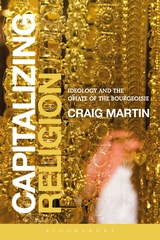 Craig Martin, Capitalizing Religion: Ideology and the Opiate of the Bourgeoisie (Bloomsbury 2014).
Talk of ‘spirituality’ and ‘individual religion’ is proliferating both in popular discourse and scholarly works. Increasingly people claim to be ‘spiritual but not religious,’ or to prefer ‘individual religion’ to ‘organized religion.’ Scholars have for decades noted the phenomenon – primarily within the middle class – of individuals picking and choosing elements from among various religious traditions, forming their own religion or spirituality for themselves.
While the topics of ‘spirituality’ and ‘individual religion’ are regularly treated as self-evident by the media and even some scholars of religion, Capitalizing Religion provides one of the first critical analyses of the phenomenon, arguing that these recent forms of spirituality are in many cases linked to capitalist ideology and consumer practices. Examining cases such as Eckhart Tolle’s The Power of Now, and Karen Berg’s God Wears Lipstick, Craig Martin ultimately argues that so-called ‘individual religion’ is a religion of the status quo or, more critically, ‘an opiate of the bourgeoisie.’
Table of Contents
Introduction
Part 1: Religion, Capitalism,and Social Theory
1. ‘Individuality is zero’
2. Theorizing ‘Individual Religion’
3. Our ‘Religion’ of the Status Quo
Part 2: The Opiate of the Bourgeoisie
4. Quietism: The Empire’s Gospel
5. Consumerism: The Fashionable Hijab
6. Productivity: The New Protestant Work Ethic
7. Individualism: A Capital Theodicy
Afterword: Things at the Disposal of Society
Bibliography
Index
Books of Interest: Sects and Stats
 James R. Lewis, Sects and Stats: Overturning the Conventional Wisdom about Cult Members (Equinox 2014)
A major, perhaps the major, focus of early research on New Religious Movements (NRMs) was on the people who joined. Most of the field’s pioneer researchers were sociologists. However, the profile of NRM members had changed substantially by the twenty-first century – changes largely missed because the great majority of current NRM specialists are not quantitatively oriented. Sects & Stats aims to overturn the conventional wisdom by drawing on current quantitative data from two sources: questionnaire research on select NRMs and relevant national census data collected by Anglophone countries. Sects & Stats also makes a strong argument for the use of longitudinal methods in studying alternative religions. Additionally, through case studies drawn from the author’s own research projects over the years, readers will be brought into a conversation about some of the issues involved in how to conduct such research.
Resources of Interest: Journal of Cognitive Historiography

This new journal—for which one of NAASR’s founders serves as a senior editor—might be of interest to NAASR members. From the publisher’s website:
The Journal of Cognitive Historiography is the first peer-reviewed publication for research concerned with the interactions between history, historiography, and/or archaeology and cognitive theories.
The journal provides a forum for scholars from a range of different disciplines, and draws on diverse approaches to examine how cognitive theorizing may support historical research, and vice versa. Examples of areas of research include the relationship between universalizing theories and specific historical events, the mental worlds and functions of historical agents, and the transmission of ideas and/or practices across time and place.
The editors welcome contributions from all periods and on all topics of historical and archaeological study, as well as those raising diverse methodological or theoretical issues. On the cognitive side, these may include, but are not limited to, those found in the disciplines of cognitive psychology, cognitive anthropology, cognitive sociology and neuroscience, as well as evolutionary theorizing.
You can find out more at the publisher’s website here.
Annual NAASR Reception, Sponsored by Equinox Publishing

The annual NAASR reception in San Diego will be held on Friday November 21 from 6:00-8:00 PM at a very cool bar called Analog (801 5th Avenue, Gaslamp district). We’ll have beer, wine, and some great hors d’oeuvres. Many thanks to Equinox Publishing for sponsoring the event!
Note: unlike last year we won’t have an open bar but instead will pass out drink tickets; there should be enough for everyone to get a couple of drinks.
Announcement: Job Ad
This job ad might be of interest to NAASR members; contact Robert Yelle (robertyelle at hotmail dot com) if you have any questions.
NAASR Note: IAHR Extended Deadline
 The IAHR September e-Bulletin is out. You can find it here.
Of particular note is the extended deadline for panel proposals for the 2015 meeting in Erfurt—the new deadline is 15 December 2014.
Also worth mentioning is the proposal to change the name of the IAHR, something which will be discussed at Erfurt next year. See the e-Bulletin for more details.
Books of Interest: Textbook Gods
 Bengt-Ove Andreassen and James R. Lewis (editors), Textbook Gods: Genre, Text and Teaching Religious Studies (Equinox 2014).
In recent years there has been a renewed interest in textbooks, partly because they have maintained their position as an important genre. Not too many years ago – and perhaps currently as well – many considered textbooks outdated or archaic compared with technological advances such as the Internet and different kinds of educational software. Despite these changes, textbooks for school subjects and for academic studies continue to be in demand. Textbooks seem to constitute a genre in which established truths are conveyed, and may thus represent stable forces in a world of flux and rapid changes.
Textbook Gods offers perspectives on representations of religion and religions in textbooks. The contributions emerge from different contexts, ranging from European countries, to North America, Japan and Australia.
NAASR members can receive 25% off the retail price using the code Textbook when ordering from http://www.equinoxpub.com; valid until the end of October 2014.
2014 Program Update

The 2014 annual meeting program has been updated; of particular note is the addition of information about two philosophy of religion working groups that will be meeting on Sunday:
Working Group: Philosophy of Religion 1
9:00 AM-11:30 AM—Gaslamp Room 1, Omni Hotel
To what extent do we need to consider the truth of what religious people say in order to understand them? In this working group discussion we consider an influential approach to meaning—“truth conditional semantics”—that ties meaning directly to truth. According to this view, grasping the conditions under which an utterance is true is central to successful interpretation, whether in religion or elsewhere. However, interpreting religious language poses some interesting challenges to truth-conditional semantics. The discussion will be led by scholars who take very different positions with respect to the relevance of truth-conditionality to religious phenomena. To the extent that truth-conditionality has been influential in philosophical semantics, this working group facilitates a focused look at possible relations between philosophy and religious studies.
Working Group Leaders Terry Godlove, Hofstra University Mark Gardiner, Mount Royal University Scott Davis, University of Richmond [Due to a scheduling conflict, Gabriel Levy (Norwegian University for Science and Tech) and Lars Albinus (Aarhus University) will not be able to attend, but will share written contributions with the other working group leaders.]
Working Group: Philosophy of Religion 2
1:00 PM-3:30 PM—Gaslamp Room 1, Omni Hotel
In order to advance the general discussion of the future of the philosophy of religion in the academic study of religion, working group leaders will invite discussion of related issues raised by Kevin Schilbrack’s recent Philosophy and the Study of Religions: A Manifesto (Wiley Blackwell, 2014). Schilbrack’s volume argues that disciplinary philosophy can play a more active, contributory role in the study of religion and, to that end, undertakes philosophical consideration of the task(s) of philosophy, the role of belief, the definition of religion, religious metaphysics, and the nature of the study of religion.
Working Group Leaders Jeppe Sinding Jensen, Aarhus University Wesley Wildman, Boston University Tim Knepper, Drake University Bryan Rennie, Westminster College Kevin Schilbrack, Western Carolina University
The organizers of the second working group asked that I share the following details about their discussion.
Jeppe Sinding Jensen will talk about the issue of the “metaphysics of religion”—are they ontological or epistemic? Or, to put it another way, what is it that we are trying to make sense of?
Tim Knepper will discuss Schilbrack’s neglect of comparison; his explication of the methodological steps of an improved philosophy of religion—description, explanation, and evaluation—fails to mention comparison. Knepper will suggest that any philosophy of religion that is religiously diverse and inclusive is necessarily comparative and should therefore make comparison a distinct, formal step of its practice.
Bryan Rennie suggests we go further then Schilbrack proposes—the methods of disciplinary philosophy could provide the centralizing paradigm around which the various contributory disciplines of the study of religion might be better organized. Rennie will suggest a “philosophical ethology” that studies religion primarily as behavior and will insist that, even in such a study, there must be greater philosophical focus on issues such as the natures of inferential reasoning, definition, truth, and “superempirical realities.”
The focus of Wildman’s discussion will be practical, thinking of Schilbrack’s work less as the splendid manifesto it is and more as a guidebook for practical change in philosophy of religion. It is not necessary to achieve consensus around Schilbrack’s functional-substantive definition of religion, the legitimacy of metaphysics, or the three goals of philosophy of religion in order to make progress. The necessary condition is to demonstrate the catastrophic weaknesses of traditional arguments in philosophy of religion. The quest for a higher quality of work necessarily leads to engagement with the academic study of religion from a host of directions. Philosophers so engaged may not agree with Schilbrack yet will make material contributions to philosophy of religion, renewed in something like the way that Schilbrack hopes, except more pluralistically and more haphazardly realized.

